
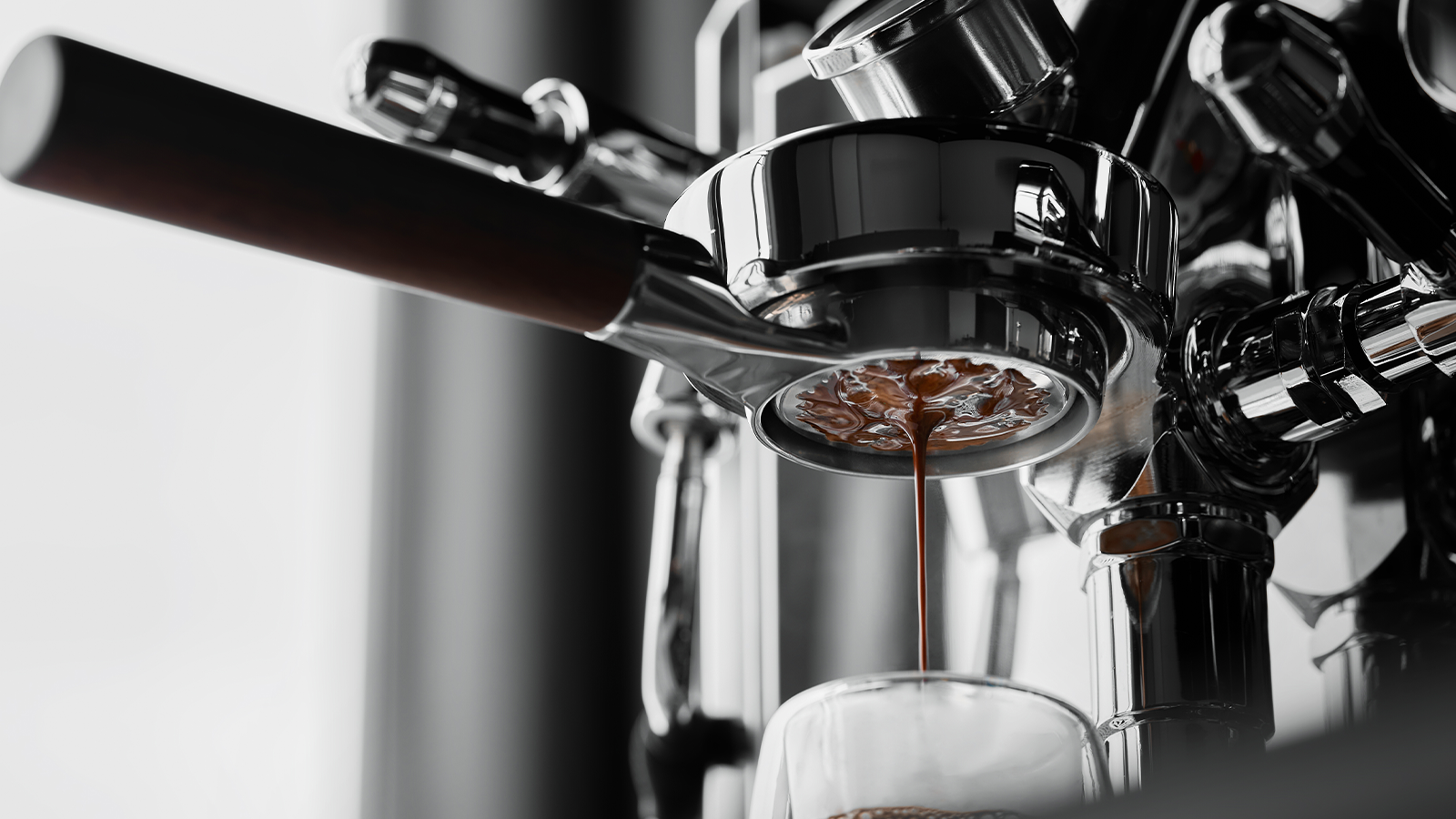
New to the home espresso hobby and wondering which handle to pick? If you’ve spent any time on coffee Instagram or TikTok, you’ve probably seen stunning, mesmerizing videos of espresso converging into a single golden stream under a "naked" handle.
While the professional and specialty coffee world has heavily shifted toward bottomless, both styles have their distinct place in a home setup. Let's break down the pros, cons, and which one deserves a spot on your drip tray.
The Side-by-Side Comparison
To help you decide at a glance, here is how the two styles stack up across the key elements of the daily brewing workflow:
| Feature | Bottomless (Naked) Portafilter | Spouted (Traditional) Portafilter |
| Skill Building | Excellent. Puts your puck prep under a microscope by showing errors instantly. | Low. Hides the "messy truth" of channeling and uneven tamping. |
| Cleanliness | Can be messy (spritzing) if your distribution or tamping is poor. | Easy & Reliable. Directs the flow cleanly into the cup every time. |
| Cup Clearance | High. Eliminates the spouts to fit tall mugs and a coffee scale easily. | Low. Limited vertical space under the group head. |
| Versatility | Brews a rich, high-crema shot into a single cup or vessel. | Double Shots. Can split a single extraction into two separate cups. |
Deep Dive: Which One Fits Your Workflow?
Why Choose the Bottomless Portafilter?
The primary beauty of a bottomless portafilter is diagnostic data. Without a metal floor and spouts, you get a real-time view of your extraction. If your grind size is too coarse or your tamping is uneven, you will see immediate "spritzing" or multiple split streams. It forces you to perfect your puck preparation. Additionally, because the espresso doesn't travel across cold metal spouts, it preserves more crema and delivers a thicker, richer mouthfeel.
Why Stick to the Spouted Portafilter?
Spouted portafilters are the classic choice for a reason: convenience and split-shots. If you regularly entertain guests and want to split an 18g double shot into two single espresso cups, spouted handles are mandatory. They are also incredibly forgiving. If your puck prep isn't perfect on a rushed Monday morning, the spouts will catch the mess, ensuring your kitchen counter stays clean.
Frequently Asked Questions (FAQs)
Q: Why is my espresso flowing much faster with the bottomless portafilter?
A: If you recently switched from a "pressurized" (dual-wall) basket—which is standard on many entry-level home machines—to a non-pressurized precision basket inside a bottomless portafilter, you will need to grind your coffee much finer. In a pressurized system, the basket creates the backpressure. In a professional bottomless setup, the resistance comes entirely from the precision of your grind and puck compression.
Q: Does it fit my machine?
A: Fitment isn’t just about diameter; it’s about the thickness and orientation of the locking "ears." At Popspresso, we engineer our portafilters to exact manufacturer tolerances. We offer precision sizes in 54mm (the Breville/Sage standard), and 58mm (for E61 and commercial-grade groups) to ensure a tight, leak-free seal.
Q: Is the bottomless portafilter harder to clean?
A: Actually, it’s much easier! Traditional spouted portafilters have hidden internal chambers where old coffee oils can accumulate, turn rancid, and affect the flavor of future shots over time. A bottomless portafilter has no hidden spots—a quick wipe and rinse of the stainless steel basket, and it's pristine.
The Final Verdict
-
Choose Bottomless if: You want to master the science of espresso, love the aesthetic of beautiful extractions, use a coffee scale, and want to maximize your crema.
-
Choose Spouted if: You want a clean, foolproof morning routine, frequently split shots for milk drinks, or prefer not to worry about micro-adjustments in your grind size.
Share:
Mastering Espresso Consistency: Why a Precision Coffee Scale is Your Ultimate Tool
Why a Precision Scale is the Secret to Barista-Quality Espresso at Home